AWD vs 4WD: What is the Difference and Which Do You Need in 2026?
You are standing on the dealership lot looking at the sticker on a new SUV. You see acronyms like AWD and 4WD. The salesperson tells you they are basically the same thing. This is incorrect. While both systems send power to all four wheels, they do so in very different ways. They are designed for different purposes and different drivers.
Choosing the wrong drivetrain can be a costly mistake. If you buy a heavy 4WD truck for a city commute, you will waste thousands of dollars on fuel. If you buy a light AWD crossover for rock crawling, you will destroy the transmission. In this definitive guide to AWD vs 4WD, we will break down the mechanics, the benefits, and the drawbacks of each system to help you choose the right tool for your lifestyle.
Understanding All-Wheel Drive (AWD)
All-Wheel Drive is the modern standard for passenger cars and crossovers. It is a system designed primarily for on-road safety and weather traction.
How It Works
An AWD system is typically “always on” or automatic. The computer monitors the wheel speed sensors. In normal driving conditions, the engine might send 100 percent of the power to the front wheels to save fuel. However, the instant a tire slips on rain or ice, the system detects the loss of traction. It immediately engages a clutch pack or differential to send power to the rear wheels.
This happens in milliseconds. The driver does not have to pull a lever or push a button. The car makes the decision for you. This seamless operation is why all wheel drive cars like the Subaru Outback or Audi Q5 are so popular with families.
The Two Types of AWD
- Full-Time AWD: All four wheels receive power continuously. This offers the best grip on dry pavement but uses more fuel.
- Part-Time (On-Demand) AWD: The vehicle drives like a front-wheel-drive car until slip is detected. This is the most common system in modern crossovers like the Honda CR-V or Toyota RAV4.
Understanding Four-Wheel Drive (4WD)
Four-Wheel Drive, often called 4×4, is the traditional system found on trucks and rugged off-roaders. It is a mechanical system designed for extreme terrain.
How It Works
A 4WD system uses a transfer case with gears. It locks the front and rear axles together. When engaged, the front wheels and rear wheels must spin at exactly the same speed. This provides massive traction in deep mud, sand, or snow.
Unlike AWD, the driver is usually in control. You have to turn a dial or pull a lever to engage “4-High” or “4-Low.” It is a deliberate action.
The Limitation of 4WD
Because the axles are locked together, they cannot rotate at different speeds. This is a problem when turning a corner on dry pavement. When you turn, the outside wheel needs to travel further than the inside wheel. In a 4WD system on dry pavement, the gears will bind and the tires will hop. This is called “driveline bind.” Therefore, you should never use traditional 4WD on dry roads. It is strictly for slippery surfaces.
Head-to-Head: Performance Scenarios
To decide between AWD vs 4WD, you need to visualize where you drive.
Scenario 1: The Snowy Commute
You live in Boston or Denver. You need to get to work on a highway that has patches of black ice and slush. Winner: AWD. The system reacts faster than you can. It adjusts torque instantly as you move from dry pavement to ice patches. A 4WD system would require you to constantly shift in and out of 4×4 mode, which is dangerous and impractical at highway speeds.
Scenario 2: The Off-Road Adventure
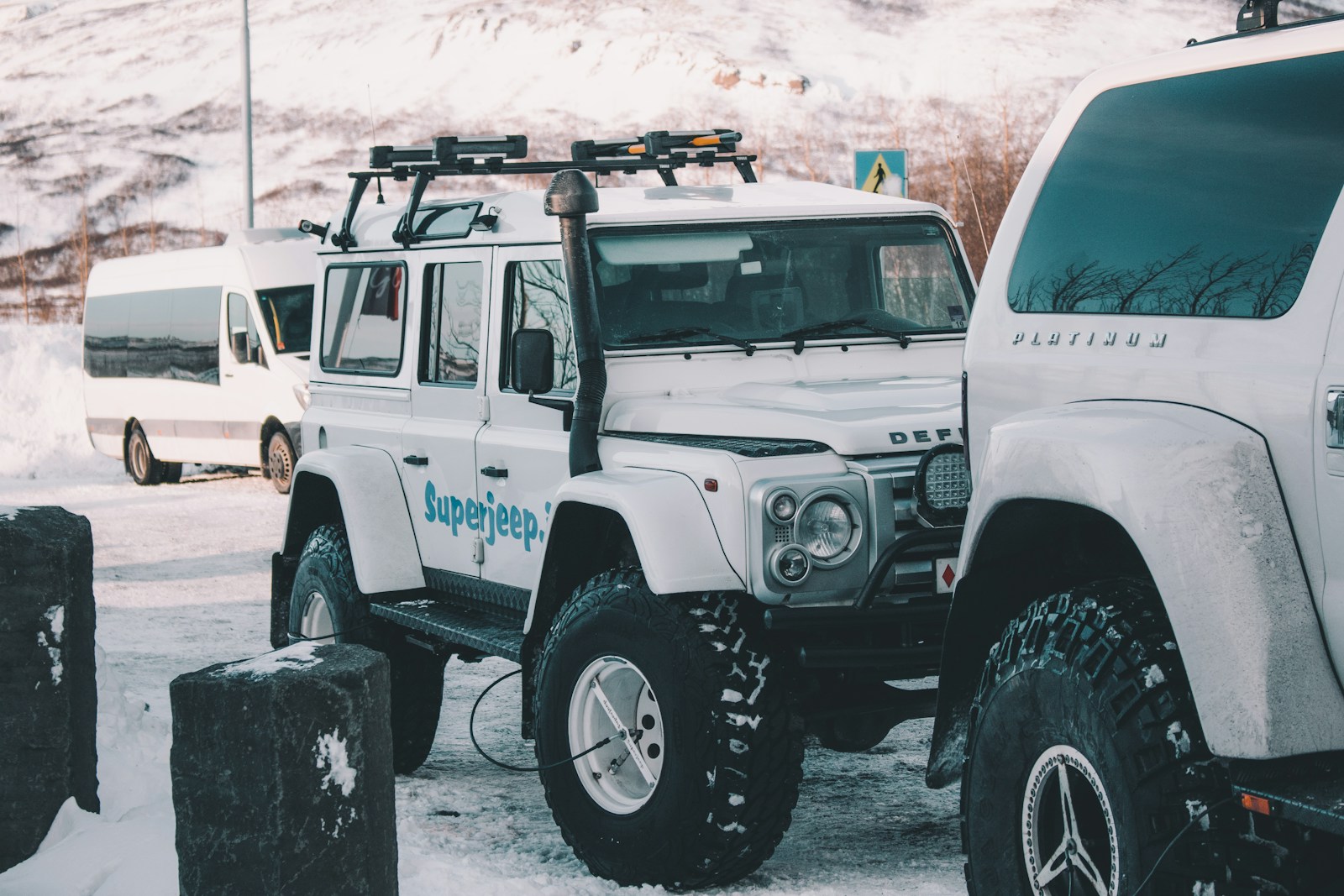
You want to take your vehicle camping in the desert or climbing over rocks in Moab. Winner: 4WD. You need the low-range gearing found in 4 wheel drive trucks. This multiplies the torque to help you crawl over obstacles at slow speeds. An AWD system would overheat and fail in these conditions.
Scenario 3: The Rainy City
You live in Seattle. It rains constantly. The roads are slick with oil and water. Winner: AWD. AWD provides extra grip for accelerating from stoplights and cornering on wet asphalt. 4WD cannot be used here because the pavement is not slippery enough to allow for wheel slip during turns.
Fuel Economy and Maintenance
Adding drive wheels adds weight and complexity. This impacts your wallet.
Fuel Efficiency
AWD systems add weight and friction. An AWD sedan will typically get 2 to 4 fewer miles per gallon than its front-wheel-drive counterpart. However, modern systems are becoming very efficient.
4WD systems are heavy. The transfer case and heavy-duty axles add hundreds of pounds. 4 wheel drive trucks are notoriously thirsty. If you do not need 4WD, skipping it can save you significant money at the pump.
Maintenance Costs
More moving parts mean more maintenance. Both systems require differential fluid changes. 4WD systems also require transfer case fluid changes. If these components fail, they are expensive to repair. Generally, AWD systems are more integrated and slightly cheaper to maintain, but if the electronic sensors fail, diagnosing them can be costly.
The Rise of Electric AWD
The debate is changing with the arrival of electric vehicles. EVs do not need driveshafts or transfer cases.
Dual Motor AWD
Most electric best off road vehicles use two motors. One sits on the front axle and one on the rear axle. There is no mechanical connection between them. The computer synchronizes them perfectly.
This “Digital AWD” is superior to mechanical systems. It can react faster and control torque more precisely. A Rivian or a Tesla Cybertruck can mimic the locking behavior of 4WD for off-roading or the fluid behavior of AWD for street driving. This technology is blurring the lines between the two traditional categories.
Tires Matter More Than Drivetrain
This is the secret that dealerships do not tell you. The tires are more important than the drivetrain explained in the brochure.
An AWD car with summer tires is useless in the snow. A front-wheel-drive car with dedicated winter tires will outperform an AWD car with all-season tires on ice.
Do not assume that buying an AWD vehicle makes you invincible. It helps you get moving, but it does not help you stop. Braking is determined by your tires. If you live in a severe winter climate, budget for winter tires regardless of whether you choose AWD vs 4WD.
Top Vehicles in Each Category
If you are shopping in 2026, here are the benchmarks.
Best AWD Vehicles
- Subaru Outback: The legendary wagon that made AWD famous.
- Audi A4 Quattro: A luxury sedan with rally-bred traction.
- Toyota RAV4 Hybrid: Uses an electric motor for the rear wheels to save fuel.
Best 4WD Vehicles
- Jeep Wrangler: The icon of off-road capability with solid axles.
- Ford F-150: The best-selling truck with a robust 4×4 system for work and play.
- Toyota 4Runner: Famous for durability and trail readiness.
Conclusion
The choice between AWD vs 4WD is a choice between convenience and capability.
If you are a typical driver who wants safety in the rain and snow without thinking about buttons and levers, All-Wheel Drive is the correct choice. It is seamless, effective, and safer for highway use.
If you are an enthusiast who plans to leave the pavement behind, or if you need a truck for heavy labor, Four-Wheel Drive is mandatory. It offers the mechanical lock and low-range power that AWD simply cannot match.
Assess your reality. Do not buy a Rubicon for a concrete jungle. Do not buy a crossover for a rock crawl. Match the machine to the mission, and you will never get stuck.